ACRYLIC POOL · WATER CIRCULATION
How to Design the Filtration System for an Acrylic Transparent Pool? From Water Quality, Circulation to Low-Bubble Control
The water quality of a transparent pool is not just a hygiene indicator — it directly affects the visual appearance of the pool walls, the sense of spatial transparency, and the daily user experience. The filtration system needs to be designed holistically, taking into account the pool structure, actual pool volume, number of users, and equipment conditions.
Design Focus 01
Particulate Filtration
Design Focus 02
Full-Pool Circulation
Design Focus 03
Bubble & Return Water Control
Design Focus 04
Water Quality Monitoring & Maintenance
Why Do Acrylic Pools Have Higher Requirements for Water Quality Management?
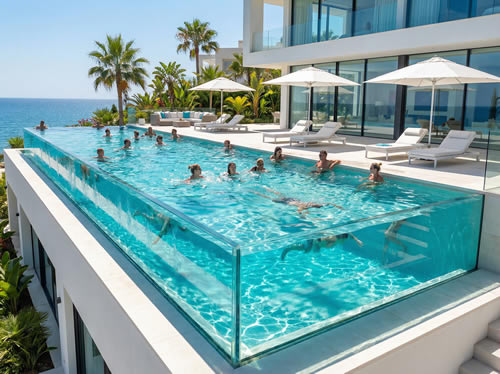
The biggest difference between an acrylic transparent pool and a conventional opaque pool is that the water body, pool walls, and surrounding environment are all visible at the same time. Fine suspended particles, poor local water flow, wall deposits, and bubbles from return water can all affect the overall appearance. Therefore, system design cannot focus only on whether the water can be filtered — it must also ensure that the water can circulate continuously and evenly.
It should be noted that filtration equipment is mainly responsible for intercepting particulate matter in the water. Disinfection, circulation, water balance, and wall cleaning are separate but interdependent processes. Simply increasing filter precision cannot replace a complete pool water treatment design.
Design Principle: Determine the circulation flow rate based on the actual pool volume and operating conditions. Determine filtration capacity based on the performance of the filtration equipment and media. Then maintain stable water quality through proper water distribution, disinfection, and maintenance plans.
What Key Issues Must a Transparent Pool Filtration System Solve?
01 / PARTICLES
Fine Suspended Matter and Filtration Capacity
Hair, fibers, dust, and other suspended particles affect water clarity. Filtration precision should be selected based on the type of filter media, equipment structure, actual flow rate, and maintenance conditions — not judged solely by a single micron rating.
02 / CIRCULATION
Circulation Path and Local Water Flow
The positions of return inlets, suction outlets, and the shape of the pool body jointly determine the water flow path. Poor layout can lead to insufficient circulation in certain areas. Hydraulic calculations and placement should be based on the pool’s dimensions, depth, and internal structure.
03 / BUBBLES
Return Water Bubbles and Visual Interference
Excessive return water velocity, air being sucked into the piping, or incomplete air venting from equipment can all cause bubble problems. These issues should be addressed comprehensively through piping sealing, suction conditions before the pump, return water direction, and system air venting.
04 / WATER QUALITY
Disinfection and Water Balance
Filtration does not equal disinfection. Water quality management should also consider the disinfection method, residual chlorine or other disinfection indicators, pH value, and water temperature, with regular testing and adjustment based on actual usage.
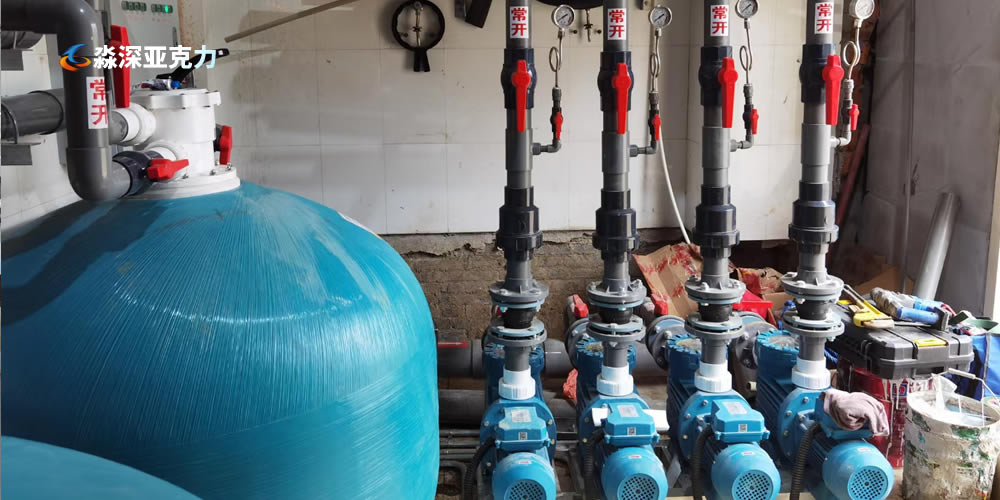
Four Key Design Stages of an Acrylic Pool Filtration System
01
Select Filtration Equipment Based on Pool Volume
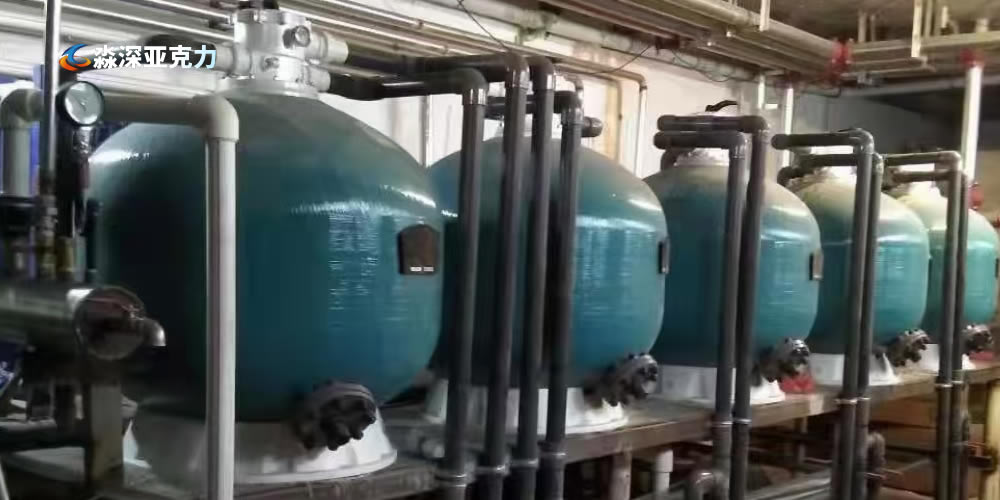
Bigger is not always better, and higher filtration precision is not necessarily more suitable. First determine the effective pool volume, design turnover rate, expected number of users, and pollution load. Then calculate the required system flow rate and match it with the filter tank, filter elements, or other filtration media.
When selecting equipment, verify the filtration capacity under actual operating flow rates, allowable working pressure, filter media replacement or cleaning methods, and long-term maintenance costs.
02
Optimize Piping and In-Pool Water Distribution
The circulation system should be considered together with the pool structure. Plan the locations of suction outlets, return inlets, and piping routes based on the pool’s length, width, depth, transparent wall positions, bottom form, and equipment room location, minimizing short-circuiting and weak circulation areas.
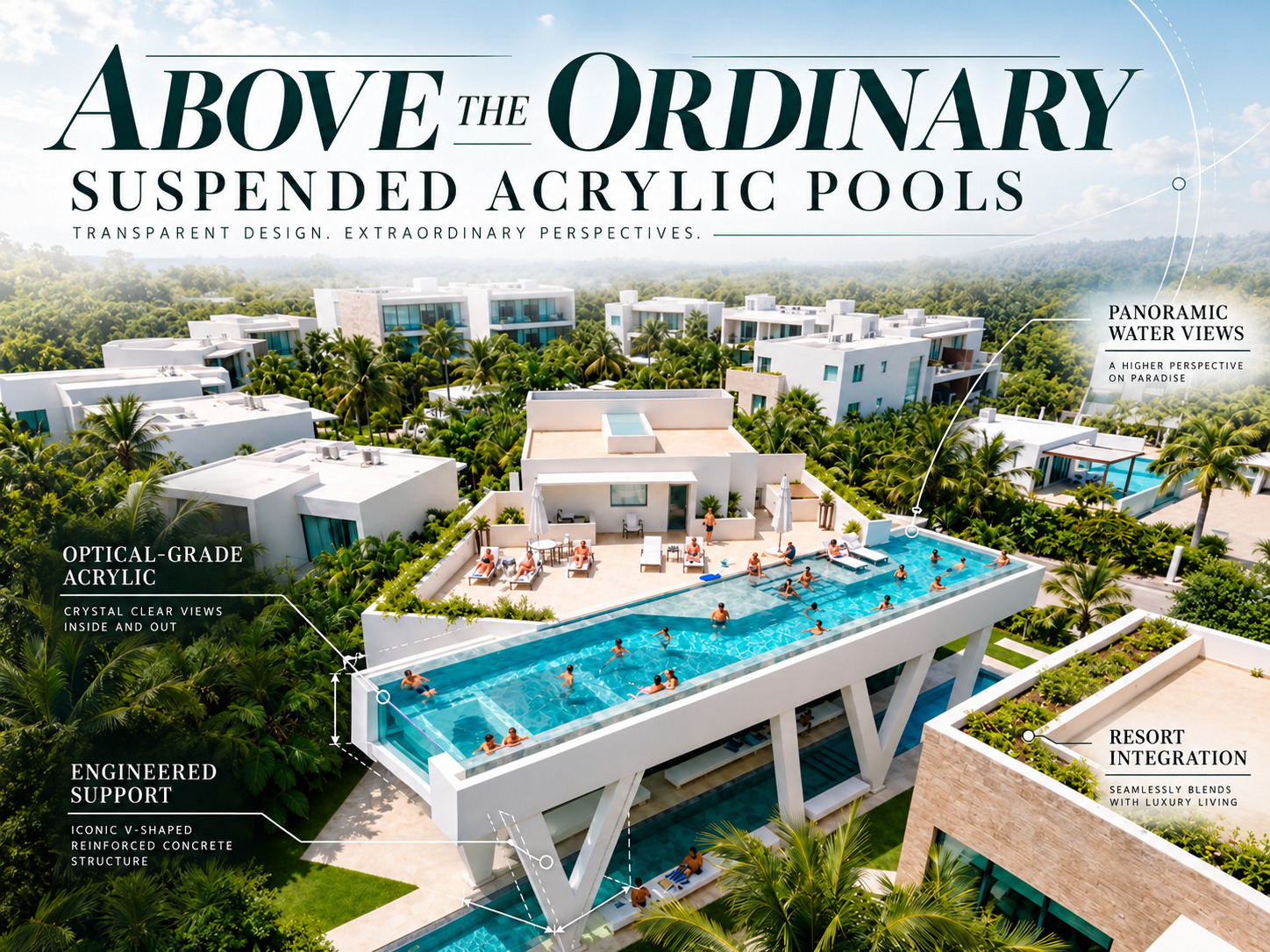
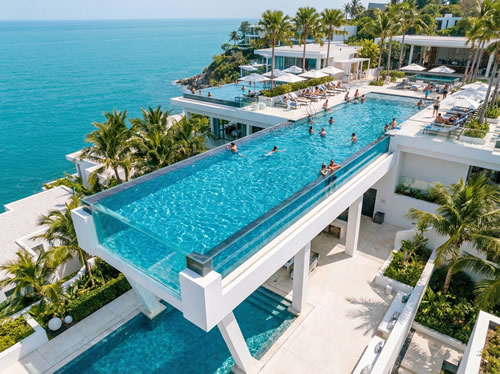
For long rectangular, cantilevered, transparent-bottom, or irregularly shaped acrylic pools, the positions of water outlets and maintenance access must be clearly defined during the design stage to avoid later pipe modifications that could affect the structure and appearance.
03
Control Bubbles and Ensure Proper System Air Venting
Bubbles in the water may come from air leaks in the piping, poor suction conditions before the pump, air trapped inside equipment, or turbulence at the return outlets. Attention should be paid to pipe joint sealing, pump installation conditions, equipment air venting, and return outlet direction. Flow rate and outlet conditions should be optimized through on-site commissioning when necessary.
Low-bubble performance needs to be verified based on actual piping and equipment operating conditions. It should not be guaranteed based on a single component or technical claim alone.
04
Configure Water Quality Monitoring and Daily Maintenance
Depending on project requirements, monitoring items such as flow rate, filter differential pressure, water temperature, turbidity, pH value, and disinfection indicators can be configured. Automatic control and remote monitoring are optional features. Whether the system supports automatic backwashing, alarms, or linked control should be determined according to the specific equipment model and control scheme.
Regular inspection of filter media condition, equipment pressure, piping connections, and water quality indicators is essential for stable system operation.
Filtration Equipment and System Configuration: What Should Be Verified During Project Selection?
Pool volume, shape, usage intensity, and equipment space vary significantly among different acrylic pools. Filtration precision, circulation flow rate, pump power, and control methods should all be determined according to project conditions. The table below lists recommended confirmation items for scheme discussion and does not represent fixed parameters applicable to all pools.
Filtration System Design: Key Items to Verify
Effective Pool Volume
Design & Selection Points: Calculate based on actual pool dimensions and water depth as the basis for circulation system selection.
Circulation Flow Rate & Turnover Period
Design & Selection Points: Calculate based on pool volume, number of users, purpose, and applicable standards. Do not use fixed values detached from project conditions.
Filtration Type & Precision
Design & Selection Points: Clarify the filter media, nominal filtration precision, actual operating flow rate, and cleaning or replacement requirements.
Pump Set & Piping
Design & Selection Points: Verify head, flow rate, pipe diameter, friction losses, equipment installation location, and maintenance access.
Disinfection & Water Quality Monitoring
Design & Selection Points: Determine the disinfection method according to the pool’s purpose and clearly define the water quality indicators that need to be monitored.
Control & Maintenance Methods
Design & Selection Points: Confirm whether timer control, differential pressure monitoring, automatic backwashing, remote management, and other functions are actually included.
Note: Equipment brand, model, filtration precision, flow rate, power, materials, and control functions shall be subject to the technical data, design calculations, and supply list of the finally selected equipment.
PROJECT DESIGN NOTES
Different Types of Acrylic Pools Require Different Filtration Solutions
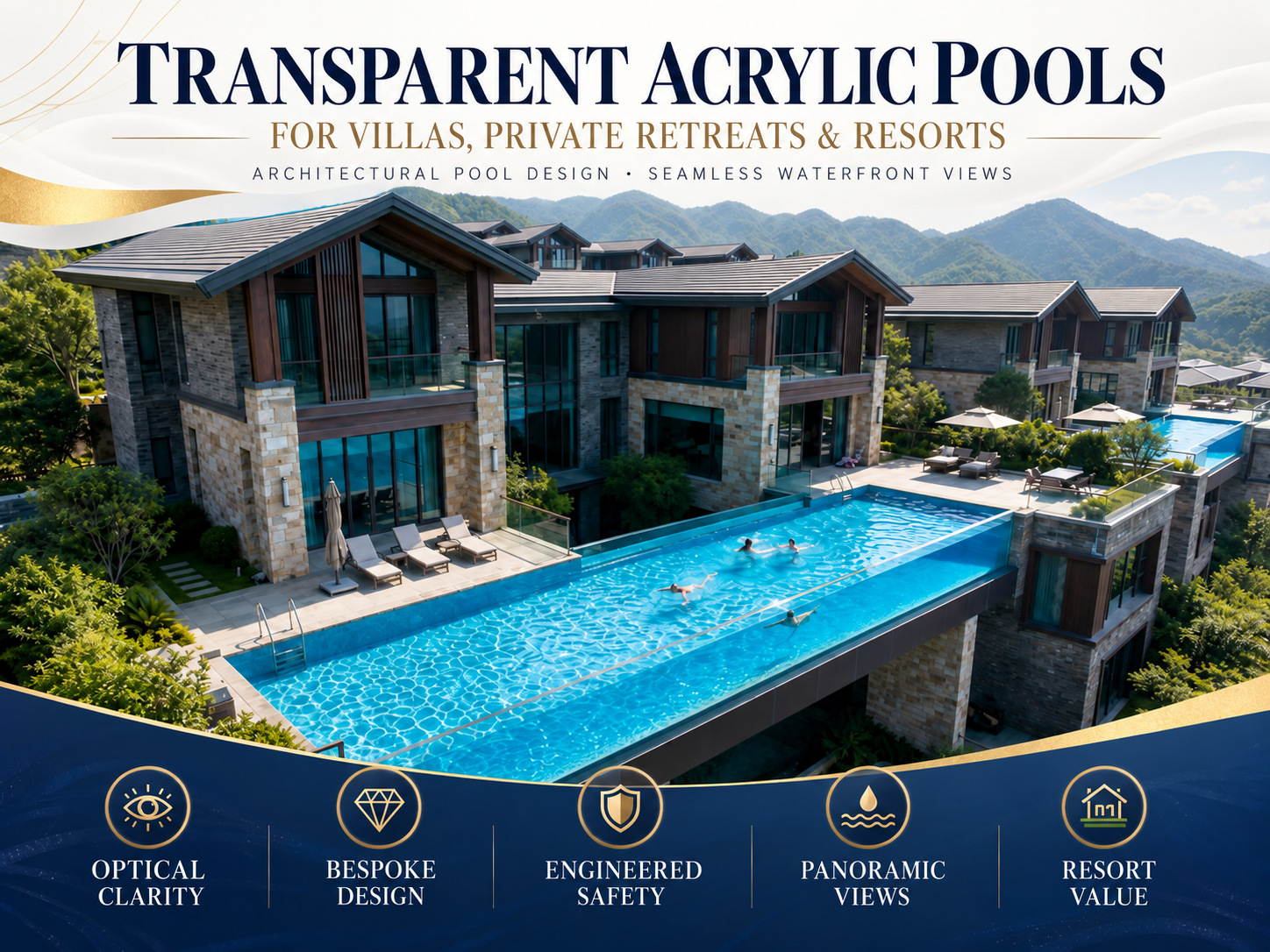
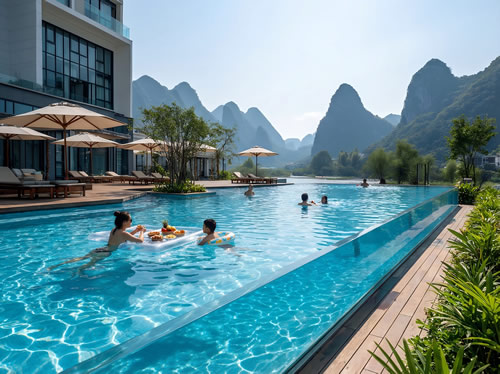
Villa garden pools, cantilevered transparent pools, transparent-bottom pools, and large commercial projects differ in pool volume, piping distance, equipment room location, and usage load. The filtration system cannot simply adopt the same set of equipment parameters.
For example, long rectangular pools require attention to water flow organization along the length; transparent-bottom or multi-sided transparent pools need to consider both the bottom/wall appearance and how piping is concealed; when the equipment room is far away, pipe resistance and pump head must be recalculated.
Therefore, a more reasonable approach is to plan the circulation piping, equipment location, and maintenance access simultaneously during the pool structural design stage, rather than adding the water treatment system after the acrylic pool body has already been installed.
Key Points for Daily Maintenance of the Filtration System
Filtration Unit
Arrange cleaning, backwashing, or filter media replacement according to equipment instructions and differential pressure changes. Do not replace actual inspections with a fixed time cycle.
Water Quality Indicators
Test disinfection indicators, pH value, and other necessary parameters according to the pool’s purpose and applicable requirements. Adjust promptly when abnormalities are found.
Circulation Equipment
Regularly check pump operating noise, flow rate, pressure, valves, and piping connections. Pay attention to water leaks, air suction, and abnormal vibration.
Acrylic Surface
Maintain the transparent surface through proper water quality management and correct cleaning methods. Avoid using unsuitable cleaning agents or tools that may cause scratches.
Frequently Asked Questions about Acrylic Transparent Pool Filtration Systems
Does higher filtration precision always mean better pool water quality?
Not necessarily. Filtration precision is only one selection criterion. Actual flow rate, filter media condition, circulation path, disinfection method, and daily maintenance must also be considered. Higher precision may also increase resistance and maintenance requirements.
Must a transparent pool use specialized filtration equipment?
Whether specialized configuration is needed depends on the pool volume, structural form, usage intensity, and water quality targets. The key is that the filtration, circulation, disinfection, and control solutions match the project conditions, not just the equipment name.
Where should I start troubleshooting if the pool has fine bubbles?
First check whether the piping before the pump is leaking air, whether water intake is sufficient, and whether air is trapped inside the equipment. Then check the position, velocity, and direction of the return outlets. If bubbles persist, on-site investigation based on system operating conditions is required.
Can the filtration equipment be decided after the pool is built?
It is not recommended to leave it entirely until later. Equipment space, embedded piping, and the positions of return and suction outlets can all affect the pool structure and appearance. It is best to plan them together during the pool design stage.
MIANSHEN ACRYLIC
Make the Clarity of Your Transparent Pool Stand the Test of Long-Term Use
The filtration system of an acrylic transparent pool needs to be considered together with the pool structure, circulation piping, equipment space, and daily maintenance. Mianshen Acrylic can assist in reviewing the key points of water treatment design for transparent pools based on the pool’s dimensions, shape, installation environment, and usage requirements.
If you need a customized acrylic transparent pool and supporting filtration solution, please provide the pool dimensions, expected water depth, and site conditions for further project configuration discussion.